

IP KAVACH is a legal‑tech platform built to make starting and protecting businesses in India simple, fast, and compliant. We combine experienced company secretaries, chartered accountants, and corporate lawyers with an easy, guided digital workflow so founders spend less time on paperwork and more time building. Our specialty is end‑to‑end company registration—from choosing the right business structure and reserving the name to incorporation on the MCA portal, opening a current account, and completing your first‑day compliances. Whether you’re a solo founder, a fast‑growing startup, or a professional services firm, IP KAVACH sets you up correctly from day one.
When you’re starting a business in India, one of the most important steps is registering your company as a legal entity. This process isn’t just a formality; it provides your business with a strong foundation and long-term credibility. Here’s why it matters:
A registered company becomes a distinct legal entity in the eyes of the law.
It can own property, sign contracts, and operate independently of the owners.
This means your personal assets remain separate from the company’s assets.
Example: If your company faces legal issues or debt, your personal house or savings are protected.
One of the biggest benefits is limited liability.
As a shareholder, you’re only liable to the extent of the money you’ve invested in the company.
Creditors cannot pursue your personal wealth if the company incurs losses or obligations.
This protection is crucial for entrepreneurs who take business risks.
Investors, banks, and venture capitalists prefer to fund registered companies because:
It is easier to verify ownership and shareholding structures.
Registered companies can issue shares and raise equity capital.
You can also access bank loans and government schemes more easily.
Customers, suppliers, and potential partners take registered companies more seriously.
Your Certificate of Incorporation demonstrates that you’re running a genuine, government-recognized business.
It enhances your reputation and makes it easier to win contracts and big clients.
Registered companies have a perpetual succession clause:
The company continues to exist even if owners change or exit.
Shares can be transferred, and new investors can be brought on board easily.
This structure makes it much easier to scale and expand nationally or globally.
Once you have a registered company, you can:
Apply for Trademark registration for your brand name or logo.
Secure your business identity and prevent copycats.
Own IP like software, designs, or creative works under the company name.
Many government incentives, subsidies, and programs are only available to registered entities:
Startup India recognition, tax exemptions, and incubation programs.
Easier participation in government tenders and public sector projects.
A registered company enjoys specific tax planning opportunities:
Can claim business expenses and deductions more effectively.
Has access to a lower tax rate than individuals in some cases.
Maintains clear financial records, which reduces compliance risks.
Registering your company is an investment in your future.
It strengthens your business credibility, protects you from personal liability, and opens doors to funding and growth opportunities. Without registration, your business remains vulnerable—both legally and financially.
With IP KAVACH, we ensure you start your business the right way: legally secure, fully compliant, and ready to scale.
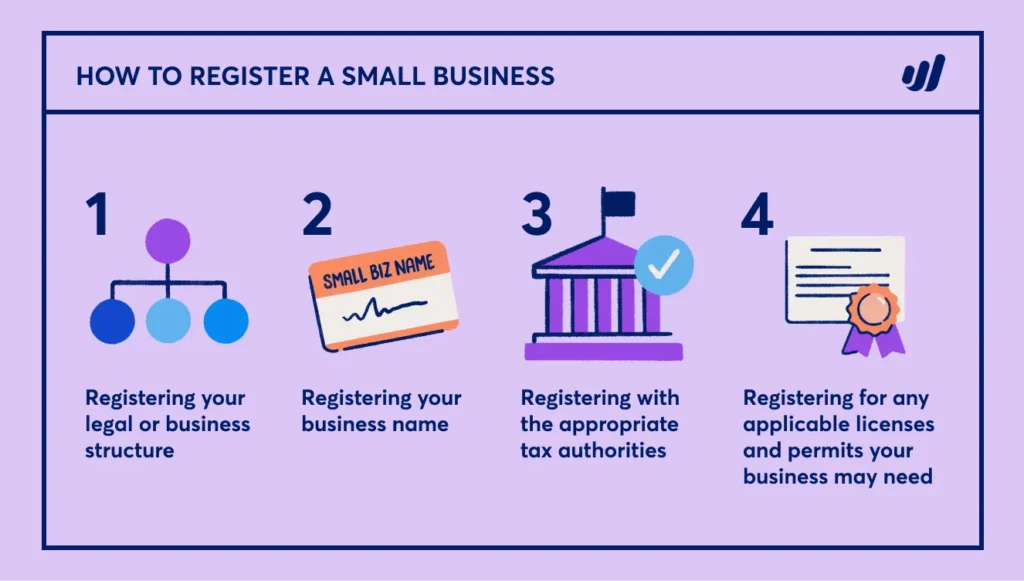
Registering a company in India is fully online through the MCA portal using the SPICe+ form. Here’s how the process works:
Before starting, decide the structure that suits your business:
Private Limited Company (most popular for startups and SMEs)
One Person Company (OPC) (for solo founders)
Limited Liability Partnership (LLP)
Section 8 Company (non-profit organization)
The structure impacts compliance, funding ability, and tax benefits.
Since the entire process is online, all directors/promoters must have a DSC to sign forms digitally.
Obtain DSC from a government-approved certifying agency.
Required documents: PAN, Aadhaar, photo, email, and mobile number.
Each director must have a DIN.
You can apply for DIN directly in the SPICe+ form (for up to 3 directors).
No need for a separate application if it’s a new company.
File Part A of the SPICe+ form to check and reserve the desired name.
MCA will check for duplicates or similar trademarks.
You can propose up to 2 names and justify your choice.
Pro Tip: Do a trademark search before applying, so your name doesn’t get rejected.
MoA (Memorandum of Association): States the objectives and scope of the company.
AoA (Articles of Association): Defines internal rules, responsibilities, and management structure.
Both can be filed electronically using eMoA (INC‑33) and eAoA (INC‑34).
This is the main incorporation application, where you provide:
Registered office address proof
Details of directors and shareholders
Capital structure (authorized and paid-up capital)
Subscriber and director declarations
Attach all KYC documents: PAN, Aadhaar, address proof, utility bills, rent agreement, and NOC from the property owner.
Along with SPICe+, file the AGILE-PRO-S form, which integrates:
GSTIN (if applicable)
ESIC and EPFO registration (mandatory)
Professional Tax (if applicable in your state)
Bank account opening with an MCA-approved bank
MCA scrutinizes the forms and documents.
If everything is in order, it issues the Certificate of Incorporation (COI) along with the Company Identification Number (CIN).
PAN and TAN are allotted automatically.
Once your company is incorporated, you must:
Hold the first board meeting within 30 days
Appoint the first auditor
Issue share certificates to shareholders
File INC‑20A (Declaration of Commencement of Business) within 180 days
Open the company’s current bank account
Register for GST (if turnover threshold is met)
Advisory first: We recommend the right entity type for your goals (PL, OPC, LLP, Section 8, or Sole Prop → upgrade path).
One window, end‑to‑end: From name checks, DSC/DIN, and MoA/AoA drafting to PAN, TAN, GST, and bank account setup—handled in one flow.
Transparent timelines & pricing: Clear document lists, real‑time status, and upfront fees (no surprise add‑ons).
Post‑incorporation onboarding: We don’t stop at the certificate. We set you up for the first year of compliance and growth.
Nationwide coverage: Digital execution across India, with local support where needed.
Identity Proof: PAN card (mandatory)
Address Proof: Aadhaar, voter ID, passport, or driving license
Photograph (passport size)
Registered Office Proof: Utility bill (not older than 2 months) + rent agreement/ownership deed + NOC from owner
Tech and SaaS founders building for scale and funding
D2C/e‑commerce brands needing GST + logistics alignment
Consulting & services firms (creatives, legal, IT, finance)
Manufacturing & traders setting up multi‑state operations
Non‑profits/Section 8 entities with CSR and grant focus
Foreign promoters launching subsidiaries in India
With IP KAVACH, incorporation isn’t just about getting a certificate—it’s about starting strong, staying compliant, and protecting your brand from day one. We handle the details. You build the business.
Ready to register?
Share your proposed company name(s) and state of registration.
Tell us your founder count and planned business activities.
We’ll reply with a tailored checklist, timeline, and fixed quote.